Tuesday, December 22, 2015

What do you want to be remembered for?


What matters isn't being applauded when you arrive—for that is common—but being missed when you leave.—Baltasar Gracian
Newspaper columnist David Brooks wrote a book called The Road to Character. In it he talks about the difference between 'resume virtues' vs. 'eulogy virtues.' In other words, what are people going to say about you when you're gone?

People won't comment on your business prowess or your bank account. Nobody is going to say how good-looking or clever you were. But they will talk about the decency you had and the kindness you showed others. 

It's hard to think about eulogy virtues while we're here. Life is tough. It's a scramble to survive.

But this life is going to end.

Not to be morbid but yeah, it's going to end. Then when it does, what do you want to be remembered for?

Billy Casper, one of the greatest golfers of all time, winner of the U.S. Open and Masters, was interviewed shortly before his death in February 2015. Reading the article you got the feeling that the interviewer was so impressed with Casper's golfing career, and when he asked what Casper wanted to be remembered for, he suggested this golfing feat or that great golfing victory. But Casper surprised.

He said he didn't want to be remembered for any of that. He wanted to be remembered for being a lover of humanity.

So what do you want to be remembered for? If you can figure that out now, you can live in a way that brings that desire to pass.

Thursday, December 3, 2015

Is endurance the secret to success?

I have only to endure. I am here to be worked upon.
          —Ralph Waldo Emerson

Ever feel like a punching bag? That life is just one blow after another? Can it be that we're the victims of some sadistic higher power that is continually punishing us, torturing us?

I admit that sometimes that's the way it feels, but I think there's something far deeper occurring. I think, like Emerson said, something is working on us. Something is shifting, shaping, changing us into more than we were. And hence our job is just to endure. To ride out the changes to get to the other side of the trials.

But yes, you have to break through to get the benefits. Consider this from Chin-Ning Chu's Thick Face, Black Heart.
...the true nature of crisis is an opportunity in disguise....It is within the process of endurance that opportunity reveals itself. Opportunity always exists within a crisis situation, but when we lose heart in a devastating crisis, we are blinded by our own emotion. When we can calmly endure the unendurable, the opportunity for a better alternative surfaces and reveals itself.
Think of when a parent loses a child. The natural temptation would be to blank out, to deaden (perhaps through alcohol or depression) being conscious. The pain is just too great. But if a person in such a terrible situation can somehow stay conscious through all that pain they often come out as utterly remarkable people. As the saying goes: 'Pain can make us bitter or better.'

Look at the life of Franklin Delano Roosevelt. As a young politician many thought him smug and overbearing. A pain in the butt really. Then at thirty-nine he suffered polio and its accompanying paralysis. For years he tried to regain use of his legs.

Years later, when he was president, someone enquired how he managed to stay so patient facing the incredible pressure of the presidency and he said:

After trying for two years to wiggle one big toe, all else seems easy.

So, are times tough? Just hang in there. You don't have to conquer them to win through to the reward. You only have to endure.

Sunday, November 29, 2015

Are you improving your soul?

I'm utterly convinced that our soul is totally different than the rest of us. In other words, the state of our soul is not in any way shape or form dependent on our looks, our social status, our worldly success or bank accounts.

I think it's important to work on improving the condition of my soul. The condition my soul is in is the best indicator of where I'm at in life.

And yet, improving the soul is so easy to overlook. Entertainment and its endless diversions are everywhere. Why do the hard grunt work improving the soul demands when you can veg out in front of the TV or computer (something I'm drawn to doing)?

And don't you just have a sense when a person's soul is right? Like, they may not have a lot of worldly success but they are at peace. They have integrity in their life. They value what matters most.

Working to develop the world's success is so much easier than working to improve the soul. But hey, the world's success is going to be stripped from you someday for sure, while the soul's success will accompany you throughout eternity.

Saturday, November 28, 2015

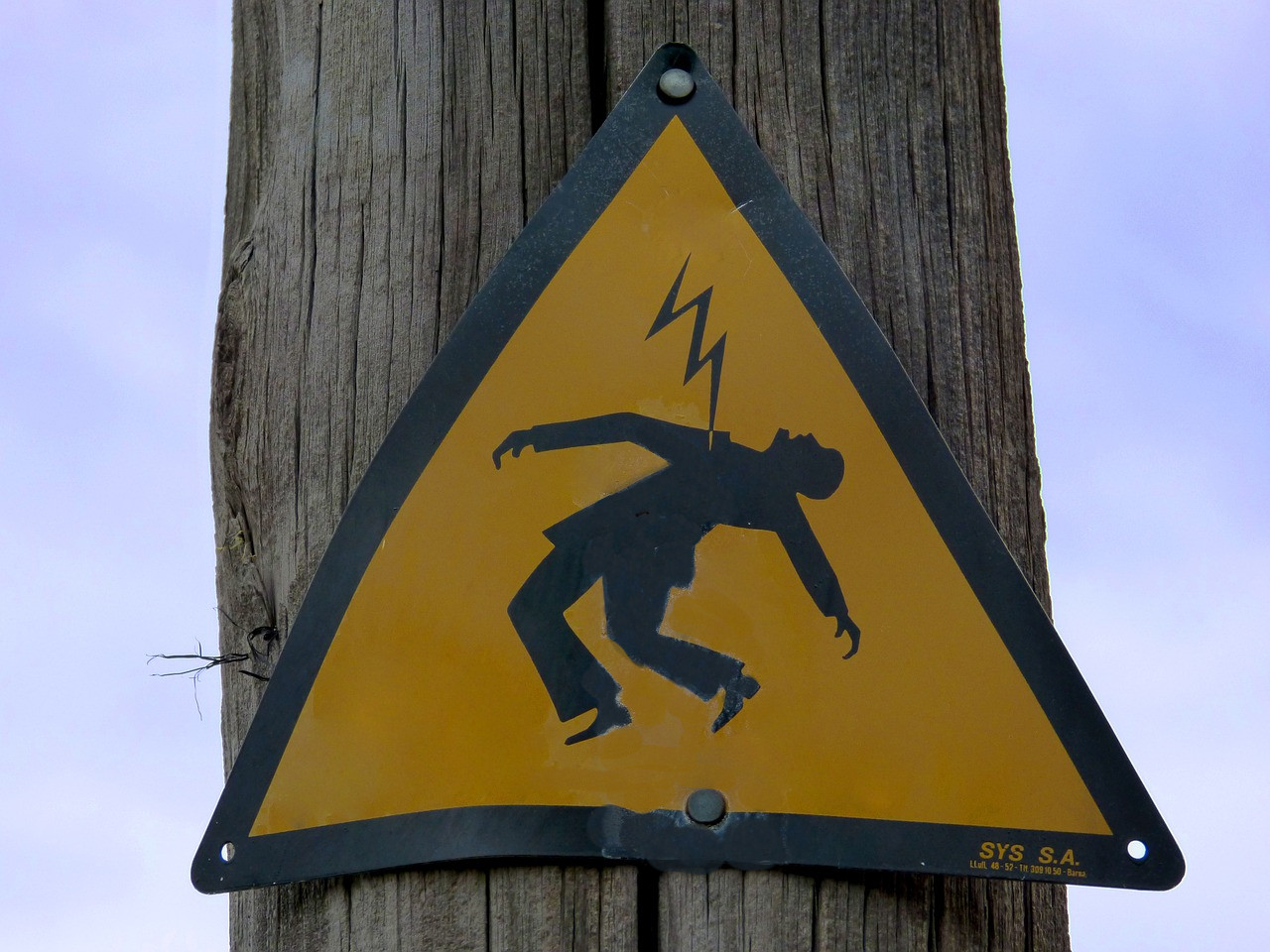
Can shocks be a good thing?

I have sustained my share of worldly shocks. —Lord Byron

I have too. I'm sure you have as well. But can shocks be a good thing?

A friend of mine once said that she needed some "bee stings" to get moving out of the complacency her life had become. Isn't that the truth? If we are overly settled in our lives, entrenched in the ruts we've been living in for a long time, well, then, chances are reasoning (no matter how persuasive) or will power or love or whatever is not going to be able to get us moving. But bee stings will.

No one handles bee stings well. They're like, "Ho, I'm out of here!" and they're running off. There's not a lot of deliberation. You're not asking a lot of questions. ('Gee, maybe I should move away from this wasp stinging me?') You're just moving. Fast.

Nobody likes to get bee stings (actual or figurative), but I think we can all agree that they do get us moving.

Health is a good example. Sometimes it takes the shock of a bad report on a test to get us taking care of our health.

I think of shocks (figurative shocks, now) as breaking up the barrier in our mind or psyche that is keeping us stuck. And nothing else will do. Even in the physical world, think of a big slab of stone blocking something. Will chipping away at it  break it open? No. It may whittle away at the edges but it will not break it open. Only an out and out smash will do the job.

So, if you want quick change in your life don't hide from shocks.

Should we pursue shocks then?

Some people do. Lord Byron did. He lived a tumultuous life of wild risk taking (and accordingly received his share of worldly shocks).

I think, though, if you want to change badly enough you don't need to find the shocks—the shocks will find you. But you do have to be open to the shocks. And not curse whatever has brought them into your life. It might even be said that it would be best to welcome them.

And then hang on for dear life while the shocks do their job—and deliver the change you were looking for.

Yes, shocks can be a good thing. A very good thing.

Wednesday, November 11, 2015

Do you have the courage to be a nobody?


From Jim Perskie in the Washington Post:

I figured out early on that I wasn't cut out to be a neurosurgeon or fighter pilot. So I kinda aimed low my whole life. It worked for me. Sure, the world needs some ambitious people. But it's worth noting that ambition has given us products like New Coke, men like Donald Trump, and war after war. Ambition certainly doesn't seem to make the ambitious particularly happy. By definition, they cannot be content with who they are and what they have. And the world seems to encourage them to inflict their desire for advancement on the rest of us. So to all you ambitious folks out there: Enough. I'll gladly concede that you all 'win.' Just leave the rest of us alone.

How you doing compared with your neighbor? The people you went to high school with? How much money do you make? What kind of car do you drive? Are you famous?

Those are a lot of questions I know I've asked myself through the years (and come up on the losing end with my answers), but now I'm reconsidering even asking those questions anymore.

Does it matter how I compare with anybody else? It can, in a negative sense. I know that much. Time and time again I've made myself miserable asking them. So why do I do it?

Good question.

Which leads to another question: Can a person live without comparing himself to others?

Yes. But from my experience it's very hard to do. But oh, the results are so worth it.

Because when I don't compare myself to anybody else I am fine! Yes, fine. Just the way I am. It's a remarkable thing. My job or my car or my significant other, whatever they may be, are just dandy. It's so freeing.

Give it a try. I promise you it will feel good.

Saturday, October 3, 2015

5 Good things about suffering


1) Suffering doesn't exist. Want proof? What one person considers disastrous, another person is not bothered by at all. So does the event cause suffering? No, our interpretation of the event. So, suffering is not out there. It doesn't exist. Where it does "exist" is within us.

2) Suffering is remedial. It's instructive. It teaches us something. It's impossible to say exactly what. It's different every time. But next time something bad happens, look to see what suffering is trying to tell you.

The problem is that most people never learn the lesson suffering presents to them and so suffer endlessly. (As life keeps trying to teach them the same lesson they haven't been learning.)

3) Suffering is always temporary. 'No way,' you say, 'some suffering is permanent.' Well, it may seem that way but it's not true. Consider this quote from the seventeenth century English preacher, Thomas Watson:

Our sufferings may be lasting, but not everlasting.  

That one requires a little thinking.

4) Suffering reveals what's inside you. You think you're a certain way. You're sure of it. But then you get put under the flame and oh, you are suddenly a very different person! Without that suffering though we live under the delusion that we are one way when we're really much more. Suffering helps us know ourselves.  

5) Suffering is a shadow. Today I turned on the light in my bathroom and saw that the carpet was wet by the toilet. "Oh no," I said softly, thinking of the hassle it implied, the cost of the plumber etc. But when I got down on my hands and knees to feel the carpet it was bone-dry. What gives?

The "wetness" was the shadow the toilet was making on the carpet. Why I never noticed it before I don't know. (Ever hear the acronym for Fear? False Evidence Appearing Real)

Suffering, all evil, is just like that—a shadow. Think of night. Dark, mysterious, dangerous. But really what is night? It's the shadow the earth makes as it revolves around the sun. The light is still there. The light is constant. It's always there.

The shadows we have in our lives are the lessons we've not learned that our suffering has been trying to teach us. Learn the lessons—and poof! the shadows (and suffering) are gone!


Wednesday, September 30, 2015

Can we trust God to do his job?


I mean, don't you ever wonder sometimes if God is up there, fully alert, handling things? Like we have our antennas out and crystal clear to receive but his transmitting station is just a little buggy today? Like, 'Hey, God, is your site down?'

Not to be irreverent but it does seem that way sometimes. Like our hearts are open to God's working, but there doesn't seem to be much working going on. We know it's not true, but when we don't see palpable results of his working we get a little mistrusting. And that is not good.

There's been a lot of suggested solutions to this problem for people of faith (of course, if you don't have faith, you're like, 'yeah, the transmitting station is not buggy, it doesn't exist!'). Some say that you can't trust your feelings. Some that God works in mysterious ways. (His ways are higher than ours.) I think there's a lot to those things, but what I think the most accurate solution is to see God working in everything.

Whatever we call good or bad or God not working or the doldrums. Whatever labels we slap on things are just that—labels. They are our interpretation of things. It's clear that's the case when you consider how to one person something might be good, while to another that exact same thing might be bad. So it's not what happens, it's how we interpret what happens.

So, when I think God's not moving in my life, that's my thing, my interpretation. The reality is that God's always working. His transmitting station is in A-1 condition, sending 24/7 without fail. God's doing his job. We can trust him.